*** CANCELLED*** CHERNOBYL: RESEARCH IN THE RADIOACTIVE EXCLUSION ZONE OF UKRAINE
unfortunately, this event cannot take place due to the speaker's disability.
WE APOLOGISE AND THANK YOU FOR YOUR UNDERSTANDING.
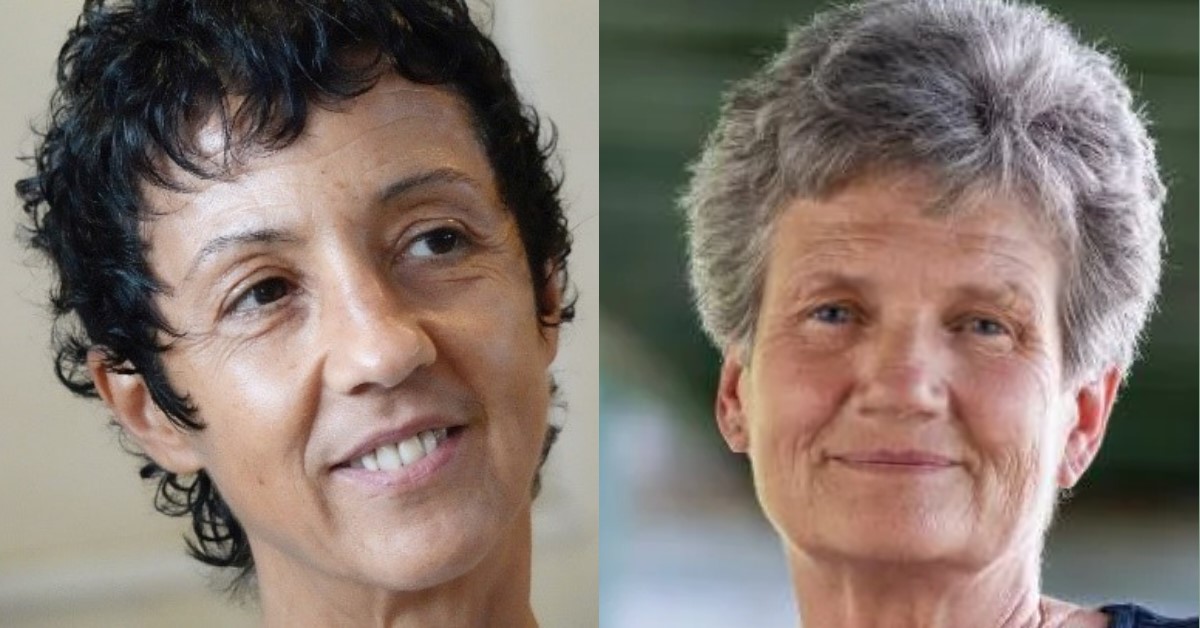
MONIKA HALKORT IN CONVERSATION WITH NATALIIA ZARUBINA
CHERNOBYL: RESEARCH IN THE RADIOACTIVE EXCLUSION ZONE OF UKRAINE
The war on Ukraine has destroyed the entire lifework of radiation physicist Nataliia Zarubina. For 36 years she has meticulously studied the long erm effects of the reactor explosion in Chernobyl, which has left the area in and around the nuclear site uninhabitable for decades to come. Her work has substantially contributed to the scientific understanding of nuclear fallout and will be vital for possible future accidents or attacks. Zarubina's efforts were brought to an abrupt end when Russian troops occupied the Chernobyl exclusion zone early last year, destroying not only her unique collection of material samples and the scientific laboratory, where she conducted her work. The movement of troops also stirred up radioactive dust, which makes it impossible to continue her comparative studies on site.
How does Nataliia Zarubina come to terms with the violent destruction of the research, to which she has dedicated her entire life and career? The role of science in war and military aggression has always been a highly contested and contentious question for physicists, especially after the invention of nuclear energy and the construction of the first atomic bombs. How does Zarubina perceive her role and responsibility in this current conflict, and the looming specter of another nuclear accident and attack it has bought about?
Nataliia Zarubina is Senior Staff Scientist at the Institute for Nuclear Research of the National Academy of Science of Ukraine and member of the International Mycorrhiza Society (IMS) as well as of the Radiobiological Society of Ukraine. In her dissertation Zarubina examined radioecological peculiarities in the territory near the Chernobyl nuclear power plant after the infamous accident. Due to the Russian invasion of Ukraine, Zarubina had to flee her home country and is now based at the University of Vienna.
Monika Halkort is a social scientist and journalist in Vienna. She currently also teaches at the University of Applied Arts as part of the master programme 'Applied Human Rights and the Arts', under the direction of Manfred Novak. Next to her academic work, she regularly produces contributions for the Ö1 programmes Radiokolleg, Hörbilder and Diagonal. From 2011 to 2020, she taught and conducted research at the Lebanese American University in Beirut, Lebanon. The thematic focus of her scholarly and publishing work is the historical interconnections of colonialism, technology and knowledge production and how they continue to shape ideas of sustainability, planetary thinking and environmental justice today.