Bridging Beliefs: Advancing Peace, Democracy, and Inclusion through Interfaith Dialogue in Europe
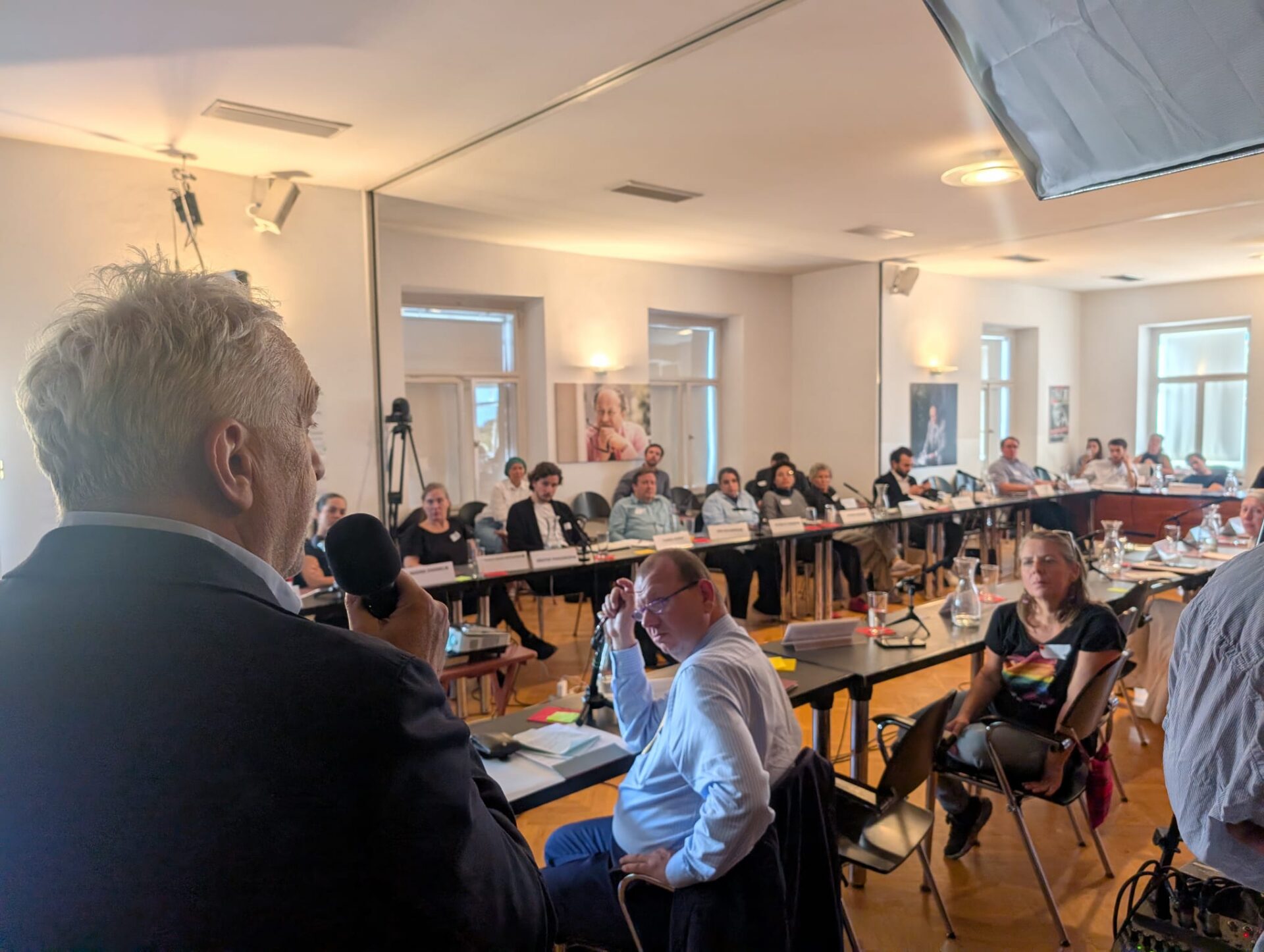
A clear picture emerged. Vienna does not lack good initiatives. Schools are opening spaces for encounter. Religious communities and public institutions have built working relationships over many years. Youth and civil-society organizations are bringing people together across religious and social lines. What is often missing is continuity. Successful work can depend on a small number of committed individuals, unpaid labor, short funding cycles, or relationships that have to be rebuilt when personnel change.
Participants discussed an interreligious encounter format, stronger school-based exchange developed with greater youth participation, and the possibility of a more regular citywide structure for interreligious cooperation. Religious literacy also returned throughout the day: public institutions need the knowledge and confidence to engage seriously with religious life, while religious communities need the ability to work effectively with public institutions and communicate beyond their own constituencies.
The closing discussion focused on what happens after an event like this. Participants were clear that the work should not be set aside until the next meeting and then began again from zero. The relationships and proposals developed during the workshop should be carried forward through smaller working formats, continued stakeholder exchange, and the next stages of Bridging Beliefs. Better coordination can itself make a difference: sometimes the missing piece is not another project, but knowing what already exists and bringing the right people into contact with one another.
The workshop also showed why Vienna can matter beyond Austria. The city has established religious communities, public institutions with decades of experience working with diversity, active schools and universities, and a strong network of civil-society and youth organizations. Participants raised the possibility that Vienna could show other European cities what sustained cooperation between public institutions and religious communities can look like in practice. The opportunity now is to connect these strengths more deliberately and give successful work enough continuity to become useful beyond the city itself.
About the project
Bridging Beliefs: Advancing Peace, Democracy, and Inclusion through Interfaith Dialogue in Europe (Bridging Beliefs) is a European project that brings together local authorities, religious communities, civil-society organizations, and citizens across European cities. Through capacity-building, local workshops, consultations, and dialogue events, the project works to strengthen democratic participation, inclusion, and sustainable cooperation across religious and convictional differences.
The Muslim Jewish Leadership Council (MJLC) is one of the project partners and leads the project’s work on Muslim-Jewish dialogue. ALDA – European Association for Local Democracy coordinates the project.
Project: Bridging Beliefs: Advancing Peace, Democracy, and Inclusion through Interfaith Dialogue in Europe
Project number: 101249742
Programme: Citizens, Equality, Rights and Values (CERV)
Project period: January 1, 2026–December 31, 2027
Project coordinator: ALDA – European Association for Local Democracy
Project contact: Sara Afendi, Project Manager, ALDA
Email: sara@aldaintranet.org
Project partners
ALDA – European Association for Local Democracy; European Buddhist Union; Equal Society; Local Democracy Agency Mostar; Regional Foundation for Local Development Zamah; Center for Cultural Dialogue – CKD; Muslim Jewish Leadership Council; COREIS – Italian Islamic Religious Community; Municipality of Centar Skopje; with the Interreligious Studies Academy as associated project participant. The Grant Agreement identifies ALDA as coordinator and MJLC as one of the participating organizations.
Funded by the European Union. Views and opinions expressed are however those of the author(s) only and do not necessarily reflect those of the European Union or CERV. Neither the European Union nor the granting authority can be held responsible for them.
