"Our country’s most important commentator": Hans Rauscher awarded the Ari Rath Prize
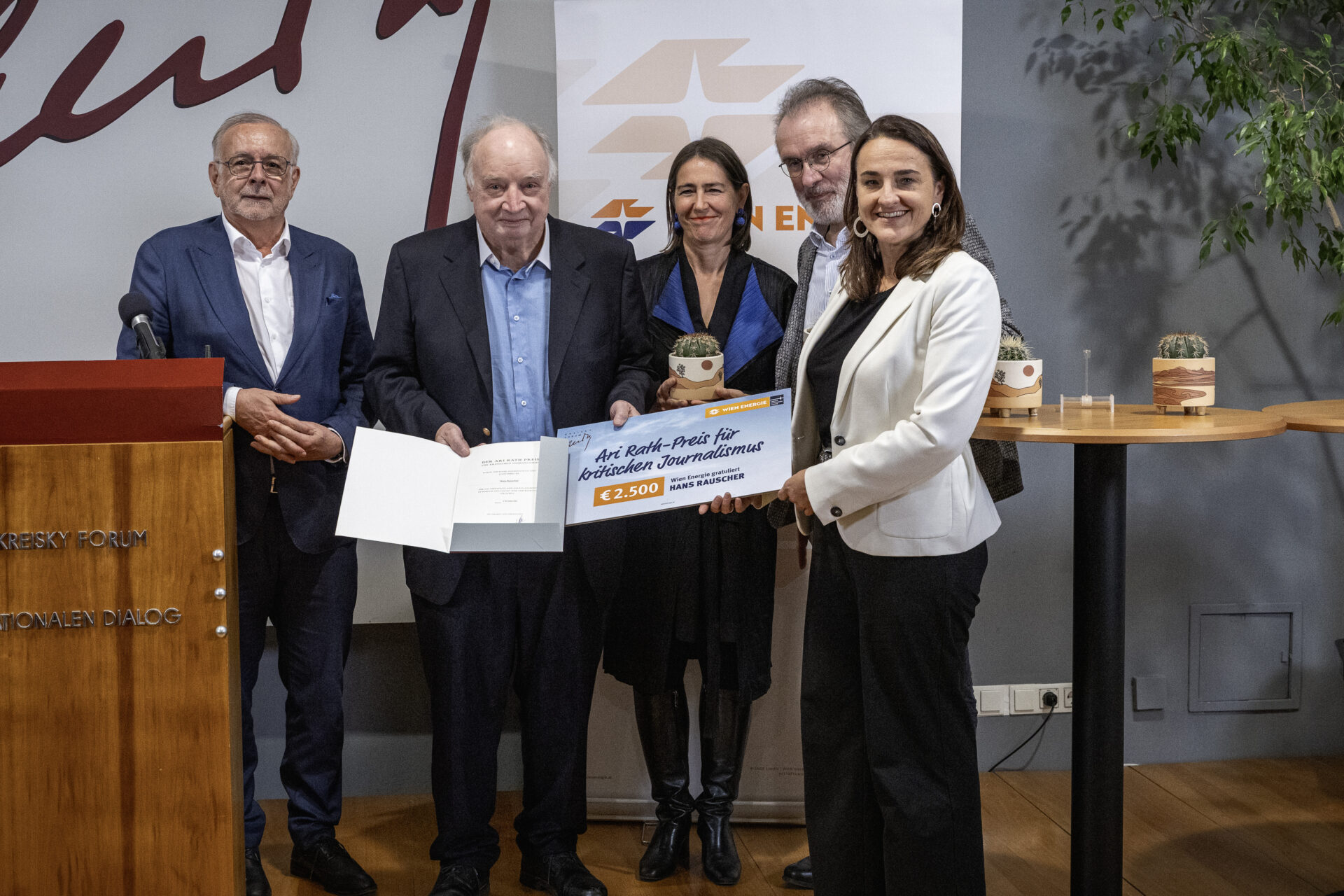
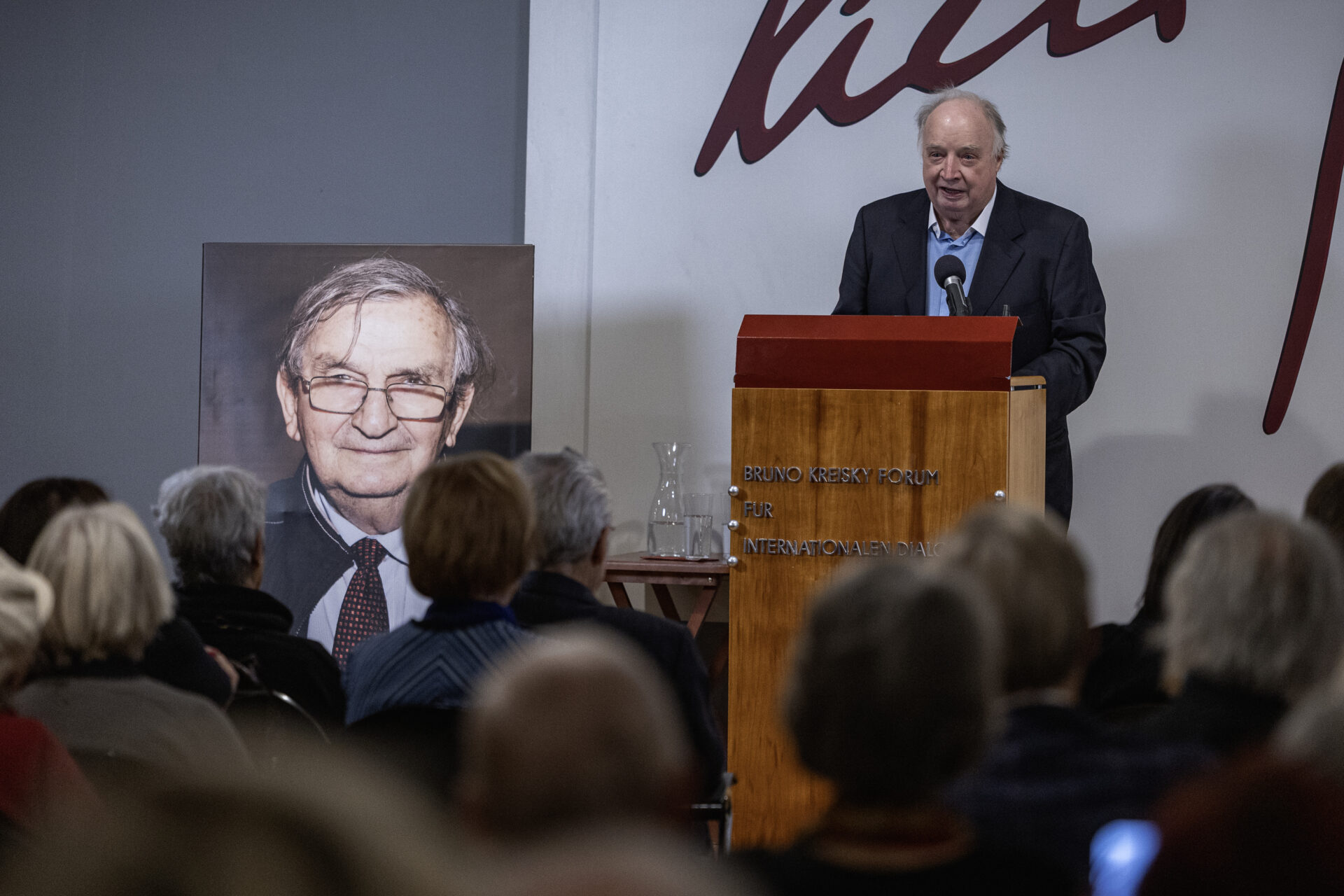
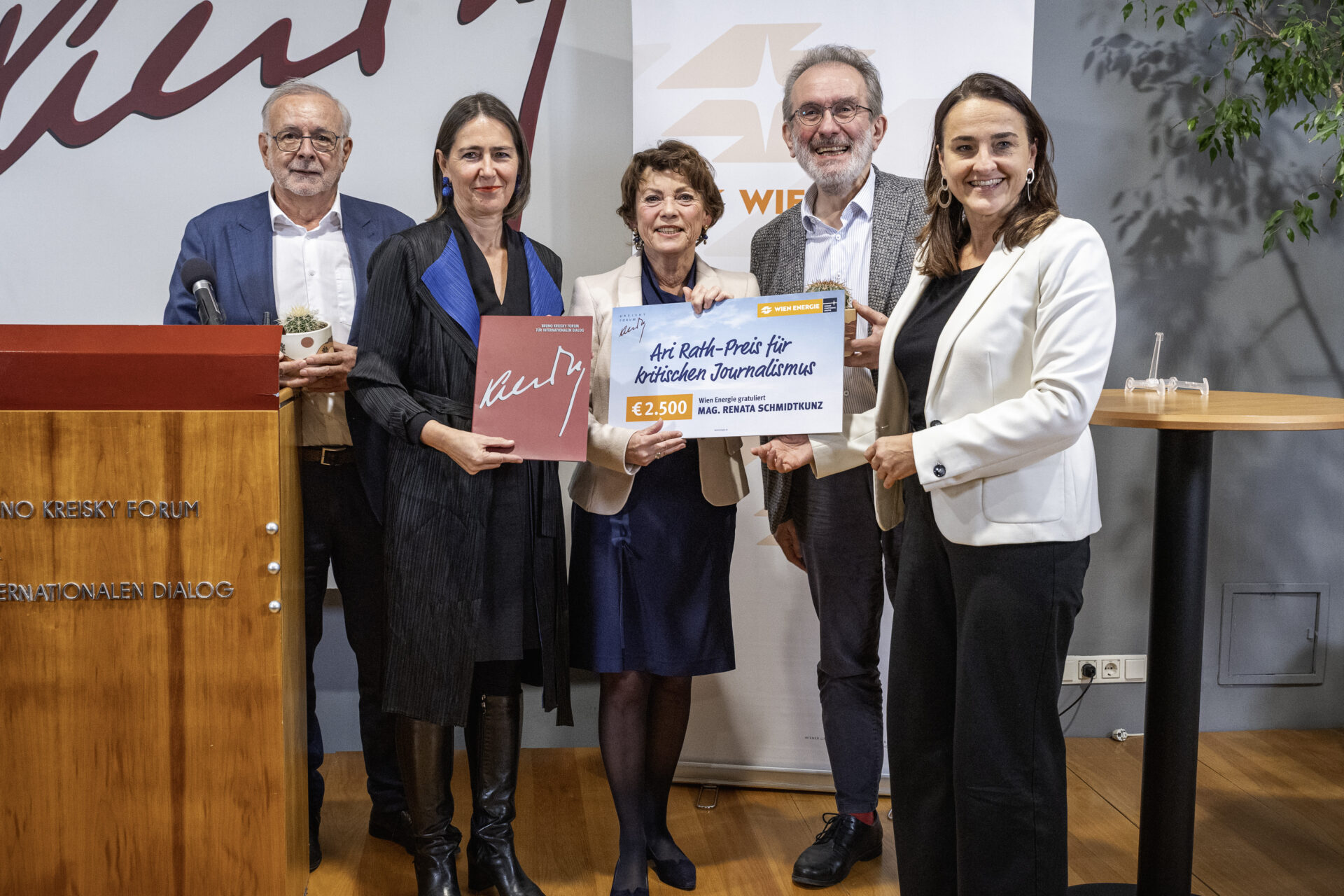
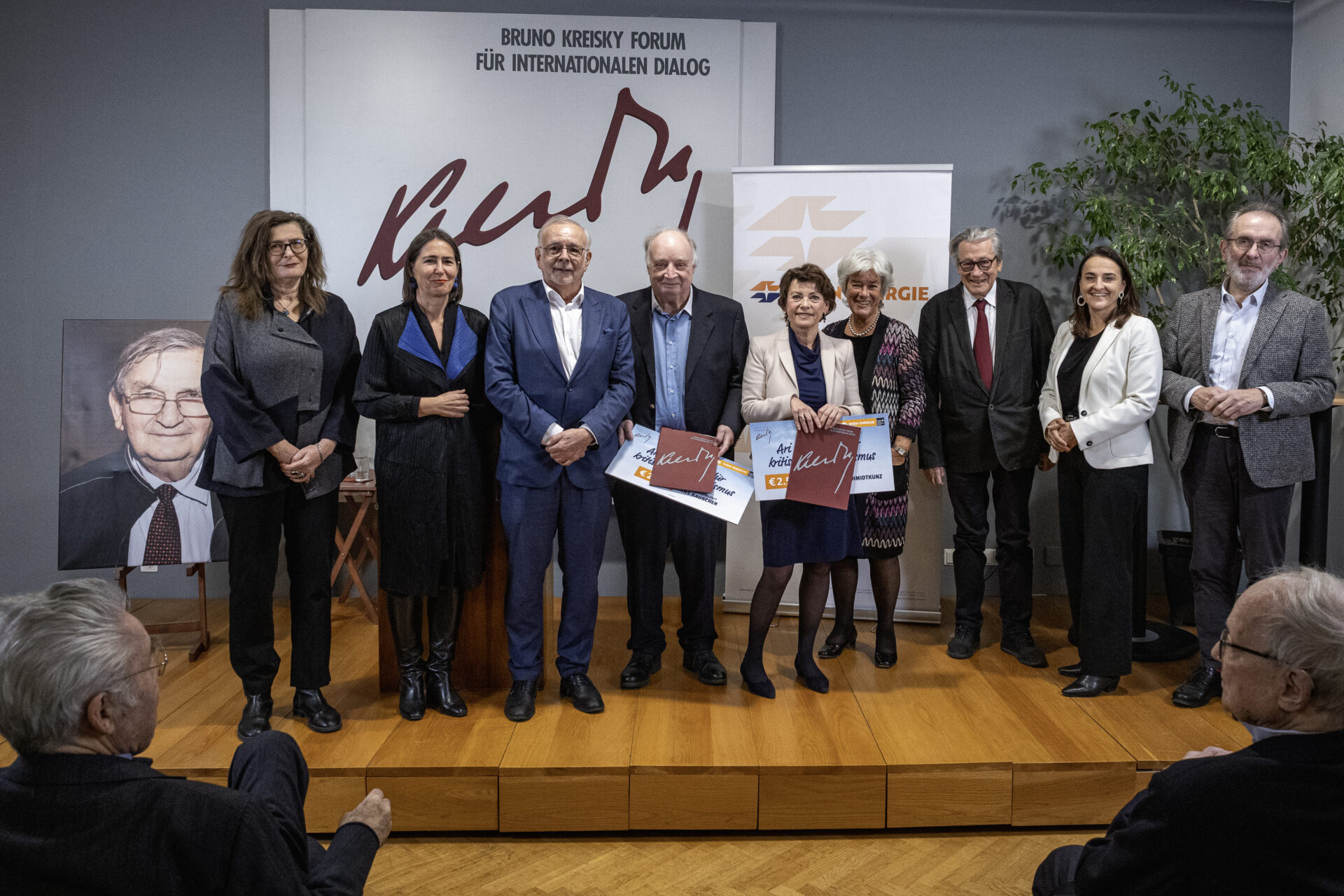
STANDARD columnist Hans Rauscher and journalist, presenter and author Renata Schmidtkunz were awarded the Ari Rath Prize for Critical Journalism at the Bruno Kreisky Forum on Monday.
The prize was established in 2018 as part of a private initiative, to honour, in the spirit of the former editor-in-chief of the Jerusalem Post – who passed away in 2017 – journalists who, through their work, have made an outstanding contribution to critical reporting on flight, displacement and asylum, whilst remaining committed to the protection of human rights.
Taking a stand against extremism
Rauscher demonstrates "a stance against extremism and right-wing populism", said SZ journalist Alexandra Föderl-Schmid, explaining the jury’s decision. Furthermore, Rauscher "always and unreservedly champions human rights and democracy. He always takes a firm stand when it comes to the restriction of fundamental rights". And he manages to "get to the heart of the matter, even in a very limited space."
Laudation by Ferdinand Lacina
In his laudatory speech, the former Finance Minister Ferdinand Lacina described Rauscher as „arguably our country’s most important commentator“. Lacina discussed Rauscher’s analysis of the Middle East conflict at length and emphasised his view that it must be possible to criticise the policies of the Israeli government without thereby calling into question Israel’s right to exist or Austria’s special historical responsibility.
In the face of armed conflicts, threats to democratic coexistence and crisis-ridden developments, the award winner „never runs out of material“.
Lacina explained that genuine concern could be found in Rauscher’s column „How the far right comes to hold absolute power“. The concern that „willing helpers“ will (once again) be found, in the form of „mostly ultra-conservative partner(s) who act as their stepping stone.... In any case, there are people within the ÖVP and in certain industrial circles who want to help Herbert Kickl become chancellor in order to secure their own interests. … With the help of the deluded, he can do just that“.
Lacina paid particular tribute to Rauscher’s perseverance: „And Hans Rauscher is certainly not one to sit idly by. Almost every day, one finds arguments and suggestions in the ‚Einserkastel‘ and frequently in his columns."
Critical journalist
"There can never be enough awards for critical journalism, "because there is perhaps too little critical journalism in Austria to begin with’,” said Rauscher in his acceptance speech.
Following the election result in Israel, "the situation in the country is no longer quite so hopeless, and it looks very promising in the light of the election results in the US, as well as in Hungary and Serbia. We must hope that the wave of far-right extremism and radical right-wing populism has now been stemmed, at least to some extent. Under these circumstances, we journalists must strive to practise critical, decent and humanitarian journalism that exposes crimes but also does not overlook the historical context. We must also continue to report intensively and clearly on the war of aggression in Ukraine, however much one may long for peace. There are people who "do not want peace’.”.
As a journalist, one must "work tirelessly to promote human rights and civilised behaviour", said Rauscher. "If we give in, if we no longer do our job properly and perhaps even take the easy route of conforming, then even those readers who live by democratic, constitutional and liberal principles will ask themselves: Why should we put ourselves on the line? Isn’t it better to conform or go with the flow? Then the democrats will feel alone and abandoned and lose heart, and then the situation could suddenly take a turn for the worse." Very often, he said, it comes down to "not giving in at the decisive moment". Rauscher sees the prize as a source of encouragement in people’s memories.
Uncomfortable topics
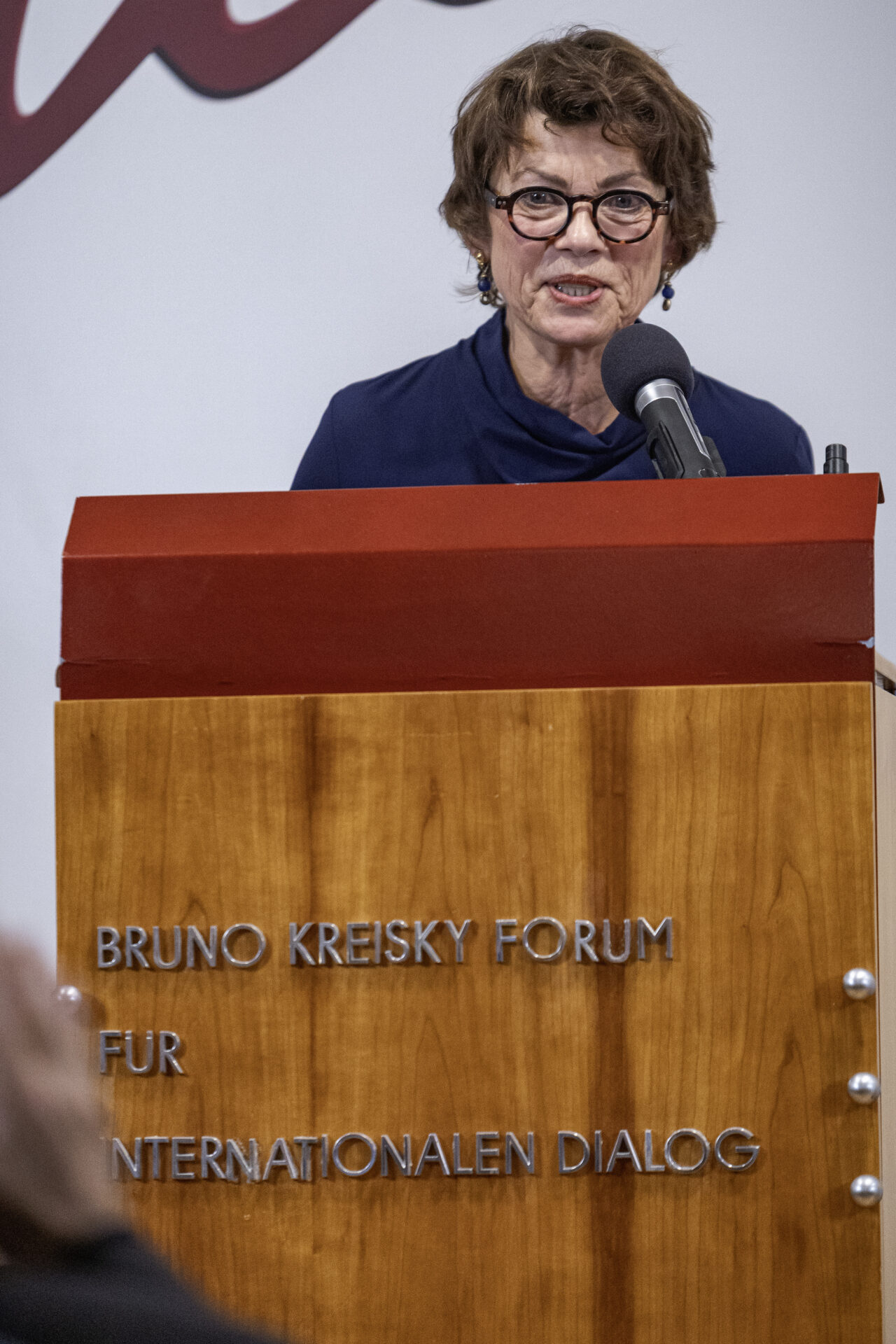
Renata Schmidtkunz has produced numerous documentary films on contemporary and social issues and hosted the Ö1 programme series *Im Gespräch* for many years. The laudatory speech in her honour was delivered by Heide Schmidt, the former Third President of the National Council.
Schmidtkunz has "never shied away from an uncomfortable topic, nor from a guest whom she knew might spark controversy or even more". In that regard, Schmidtkunz is "fearless", said Schmidt. She "lives by her principles".
In her acceptance speech, Schmidtkunz began by recalling her long-standing friendship with Ari Rath, who had taught her a great deal about the history of Zionism and the Israeli-Palestinian conflict. "The older Ari got, the more critical he became of his country’s politics." She said she had been able to speak openly with him about her growing concerns regarding Israeli policy. "I just wanted to make it clear that Ari was no apologist for the Israeli policies under Ariel Sharon and Benjamin Netanyahu, which were turning away from the path to peace." She is also delighted by the award because it recognises critical journalism. "Constantly questioning whether things really are as they are presented to you was, until a few years ago, the very essence – not just of my journalistic thinking."
Increasing pressure
Schmidtkunz went on to speak about the pressure to which, in her view, critical journalism is increasingly being subjected. "But since 2020, there has been a rise in bans on what journalists can say and write. Or perhaps to put it another way: self-censorship is increasing rapidly."
She said she had experienced this during the Covid-19 pandemic and following the outbreak of the war in Ukraine. Her assessment of the period since 7 October 2023 was particularly scathing: "The pressure exerted on journalists in many European countries following that fateful, bitterly dramatic and sad 7 October 2023 – but above all in Germany and Austria – has surpassed everything I have experienced, heard and read in my nearly 40 years at ORF and in journalism as a whole."
She summarised her own journalistic ethos as follows: "Taking a critical look at society and the world in which I live is second nature to me." Her appeal to the audience: „Do not be afraid to raise your voice for humanity and reason! Stand up for those who defend what is good!“ (prie, 4 November 2026)
"A Living Legend" – Hans Rauscher tells his story
In the podcast series "Living Legends" From Thursday (5 November), Hans Rauscher will be sharing his story, world view and experiences in four instalments, published weekly, via the Storytime Media agency run by Mesi Tötschinger, Eva Weissenberger and Lisa Sans. The series traces Rauscher’s career in journalism: from a report on his school-leaving trip to Istanbul, through the founding of the business magazine *Trend* and his years as head of domestic politics and deputy editor-in-chief of the *Kurier*, right up to his work for *Der STANDARD*. He emphasises the responsibility that comes with the profession: „You must be able to tell those with a democratic mindset: you are not alone. That is the function of critical, democratic journalism: to ensure that those who fundamentally believe in democracy do not lose heart in difficult times. And we are living in such difficult times right now.“