Cruelty
YouTube premiere "From Kreisky's living room"
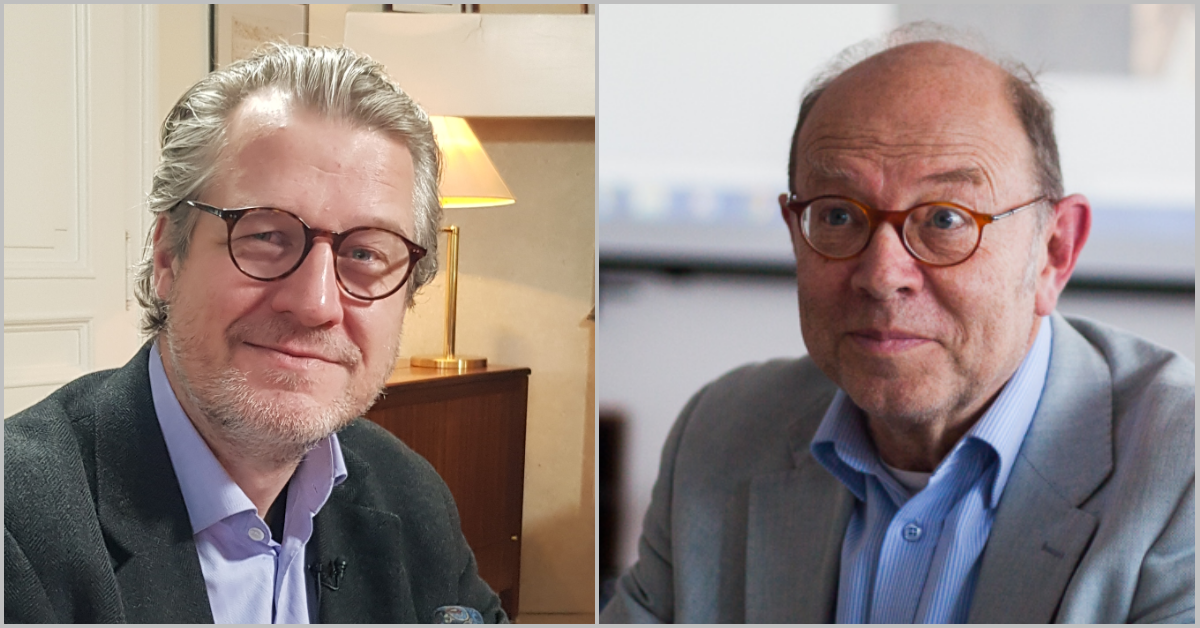
PHILIPP BLOM IN CONVERSATION WITH WOLFGANG MÜLLER-FUNK
Cruelty
What role does cruelty play in human history?
Man »is also the cruel animal«. This radical thesis is the starting point of a discourse history of cruelty by Wolfgang Müller-Funk, which has just been published by Matthes & Seitz. By defining cruelty as part of the civilisation process, the cultural scientist succeeds in taking a shocking look at an aspect of human evolution that conventional descriptions conceal: Experimentation with possibilities and the leeway and forms of representation provided by the language of words point to completely artificial forms of violence that are neither accidental nor necessary. The uncanny attraction of cruelty also lies in its dubious promise of unhindered self-assertion. In twelve concise chapters - on Robert Musil and Ernst Jünger, Seneca and Friedrich Nietzsche, Elias Canetti and the Marquis de Sade, Jean Améry and Mario Vargas Llosa, Sigmund Freud and Maurice Merleau-Ponty, Ismail Kadare and Arthur Koestler - Müller-Funk's study gives the lie to Gottfried Benn's statement that liberal man cannot look violence in the eye. His history of cruelty, informed by literature, shows a philosophical way of resisting its temptations.
In Kreisky's living room, Philipp Blom discusses the terrifying ingenuity of cruelty with Wolfgang Müller-Funk - and what it teaches us about people.
Wolfgang Müller-Funk was Professor of Cultural Studies in Birmingham and Vienna and a Fellow at the New School for Social Research in New York and the Institute for Human Sciences in Vienna. His numerous publications include Theories of the Other (2016), 365 Days Are Not a Year (2020) and The Art of Doubt (2021).
Philipp Blom studied philosophy, history and Jewish studies in Vienna and Oxford. He lives as a writer and historian in Vienna and writes regularly for European and American magazines and newspapers.
Wolfgang Müller-Funk:
Crudelitas. Twelve chapters of a discursive history of cruelty
360 pages, Matthes & Seitz Berlin, February 2022, ISBN 978-3-7518-0335-9