FRANCO MUST BE FORGOTTEN. 90 years since the Spanish Civil War
„A cautionary tale about the destruction of democracy. (…) In light of the global shift to the right, the Spanish experience is distressingly topical.“
Wolfgang Benz, Professor Emeritus of Contemporary History at the Technical University of Berlin, founder of the Berlin Centre for Research on Anti-Semitism
On 17 July 1936, an uprising began in a Spanish enclave in North Africa that was to plunge Spain into a bloody civil war and transform it into a military dictatorship for decades to come: The years-long orgy of murder, during which Nationalist forces wiped out entire Republican villages, was a war that was used by the Soviets and the Nazis as a testing ground for new tactics and military technologies.
On the Republican side, however, there was an unprecedented wave of international solidarity and the formation of International Brigades, in which 1,400 Austrians also took part. Among them were 34 women, the majority aged between 20 and 35, who served in the medical corps as nurses, doctors or X-ray assistants. Most had already been politically active and had been arrested during the Austrofascist era.
In his latest book, *Franco Must Be Forgotten*, literary scholar Thomas Stölting explores fascist violence, historical memory and political responsibility. By setting out the events leading up to and following the Spanish Civil War, a pattern emerges that is familiar from contemporary conflicts. This is not a crude repetition of history. Rather, it is precisely in the differences that the enduring core of fascist thought and action stands out all the more clearly: the strategic division of a society and the persecution of those who are labelled „different“ or „foreign“ and marginalised.
How can a democratic society come to terms with this legacy? And why – given the numerous wars taking place around the world – are there no longer any major international solidarity movements?
Afterwards, with the kind support of the Embassy of the Kingdom of Spain in Austria, we would like to invite you to enjoy some wine and savoury biscuits.
Greeting:
H.E. Aurora Mejía, Ambassador of the Kingdom of Spain to Austria
Panellists:
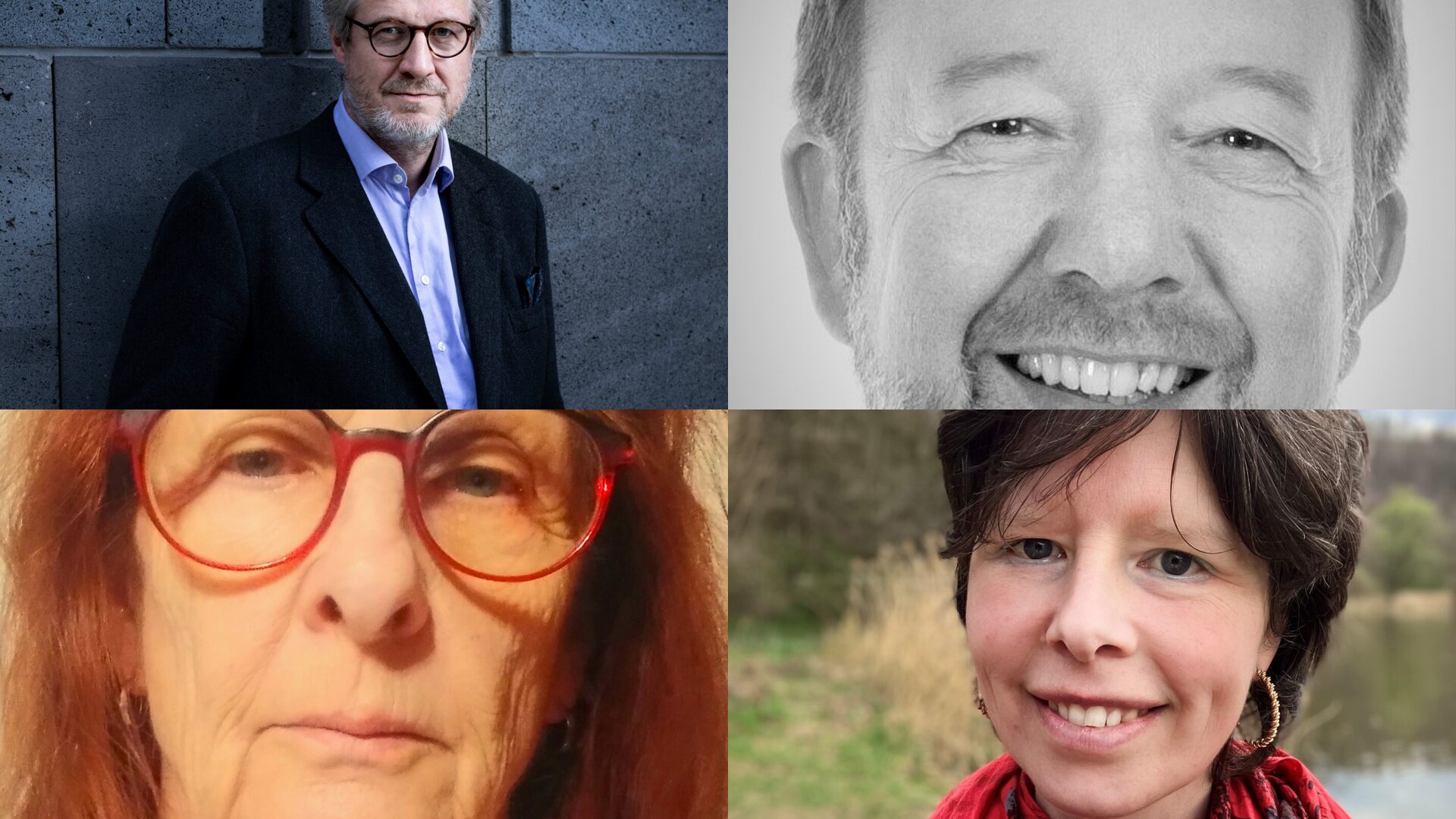
Thomas Stölting, born in Bielefeld in 1959, is a literary scholar and sociologist. In 1997, he was elected as a district councillor for Hamburg-Mitte and had served as his parliamentary group’s chief of staff since 2000. Between 2006 and 2013, he was also the Hamburg regional chair of the non-partisan organisation Europa-Union Deutschland e.V. Between 2013 and 2022, he lived and worked in Spain, and has been living in Berlin ever since. He writes for Lettre International, amongst other publications.
Irene Filip, born in Mödling in 1952, is the head of the Spain Archive at the Documentation Centre of the Austrian Resistance (DÖW). She is the daughter of an Austrian volunteer in the International Brigades. From the 1990s onwards, she worked for the Association of Austrian Volunteers in the Spanish Republic 1936–1939. Her work focuses on researching the fates of Austrian women who fought on the side of the Spanish Republic.
Ute Sonnleitner, born in 1981, is a historian whose research focuses on resistance and subversion, the history of migration, and women’s and gender studies. She has been head of the education department at V/ÖGB Styria since 2016.
Moderation
Philipp Blom, studied philosophy, history and Jewish studies in Vienna and Oxford. He lives in Vienna as a writer and historian and writes regularly for European and American magazines and newspapers
Thomas Stölting
Franco must be forgotten.
Mandelbaumverlag, January 2026, €20