HISTORIOGRAPHY BETWEEN MYTHS AND LEGENDS
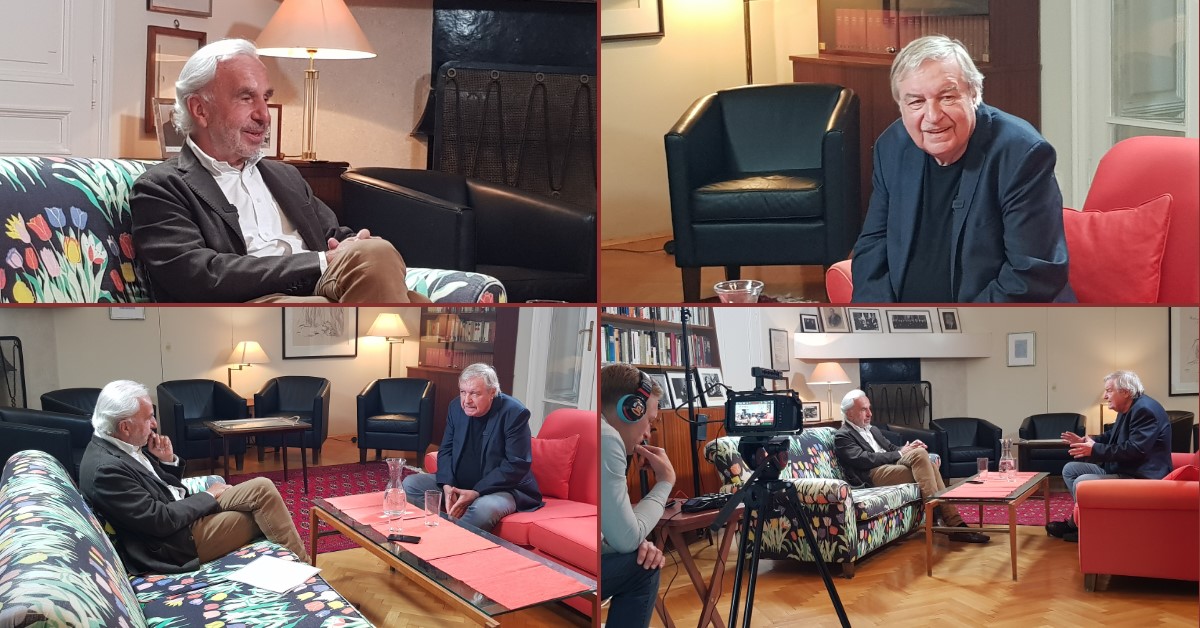
YouTube premiere "From Kreisky's living room"
Rudolf Scholten and Wolfgang Maderthaner
HISTORIOGRAPHY BETWEEN MYTHS AND LEGENDS
The beginnings of the Habsburgs in Austria: Rudolf I and his time
In a further instalment of their discussions on myths and legends in Austrian history, BKF President Rudolf Scholten and historian Wolfgang Maderthaner look at the beginnings of Habsburg rule over Austria.
Rudolf I is the founding father of the Habsburg dynasty and a skilful power strategist. As a minor count with his ancestral seat in the Swiss canton of Aargau and possessions in Alsace, he succeeded in being elected Roman-German king in 1273. By marrying off his children - a model for Habsburg marriage policy over the next four centuries - he extended his sphere of influence. His powerful rival, King Ottokar of Bohemia, fell in the Battle of Marchfeld (1278) and Rudolf became ruler of Austria - the heart of the future Danube monarchy with Vienna as its capital.
Rudolf Scholten and Wolfgang Maderthaner talk about the skills of the first Habsburg king in securing his rule both internally and externally, about the interplay of religious and secular power, about feudalism and the rise of the cities in the 13th century.
And they deal with the threatening superpower in the East, which subjugates two thirds of the then known world: the myth-enshrouded Mongol Empire of Genghis Khan and his descendants. The Mongol advance terrifies Europe. Around 1240, after massacres in Korneuburg and Wiener Neustadt, they are in front of Vienna, but then retreat for reasons that remain unclear to this day.
Wolfgang Maderthaner, historian, president of the Association for the History of the Labour Movement
Rudolf Scholten, President of the Bruno Kreisky Forum