WHEAT, WEAPONS, RESISTANCE
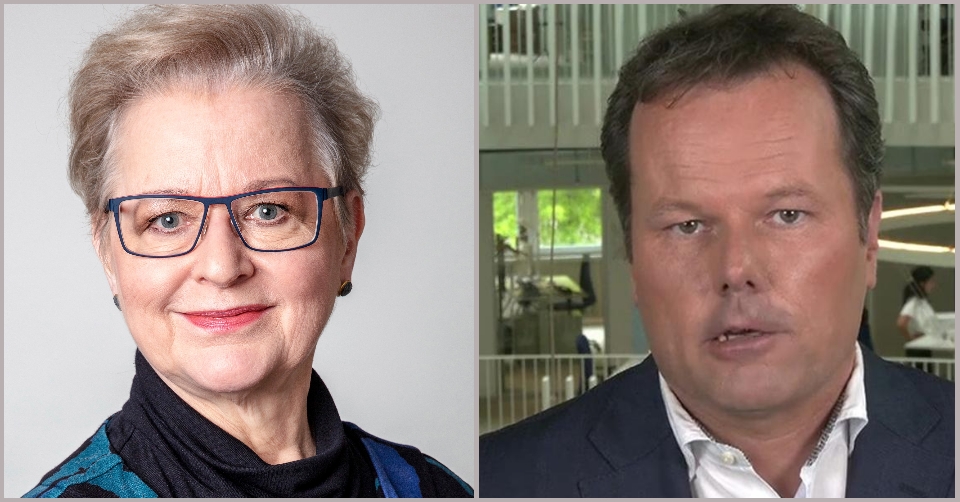
Gudrun Harrer in conversation with Eckart Woertz
WHEAT, WEAPONS, RESISTANCE: RUSSIA'S MIDDLE EAST POLICY AFTER THE UKRAINE AND GAZA WARS
While Russian propaganda about the war in Ukraine initially focused on the alleged „denazification“ of the neighbouring country, the autocratic state now sees itself in an epic defensive battle against the West, in which the geopolitical cards are being reshuffled. What role does the Middle East play in Russian foreign policy and how does it view Putin's empire as a foreign policy actor? The lecture analyses historical continuities and new constellations. Russia has successfully re-established itself as a power-political player in the region during the Syrian and Libyan civil wars. It is trying to use food trade as leverage in the import-dependent region and is offering itself as an alternative to Western arms supplies and a partner in the civilian use of nuclear power. However, its rapprochement with Iran harbours risks. In addition, Russia is not very attractive as an economic partner compared to China and Europe.
Eckart Woertz is Director of the GIGA Institute of Middle Eastern Studies in Hamburg and Professor of Contemporary History and Politics of the Middle East at the University of Hamburg. Research and teaching assignments have previously taken the political scientist and Islamic scholar to Barcelona, Beirut, Dubai, Paris and Rabat. Woertz is currently researching the contemporary history of Iraq, the energy transition in the MENA states and the Euro-Mediterranean partnership (EUROMED).
Gudrun Harrer, Senior Editor, Der Standard; Lecturer for Modern History and Politics of the Near and Middle East at the University of Vienna and the Diplomatic Academy of Vienna