Austrian-Chinese Research and Science Dialogue. Europe, the United States and China – Insights from Fudan University
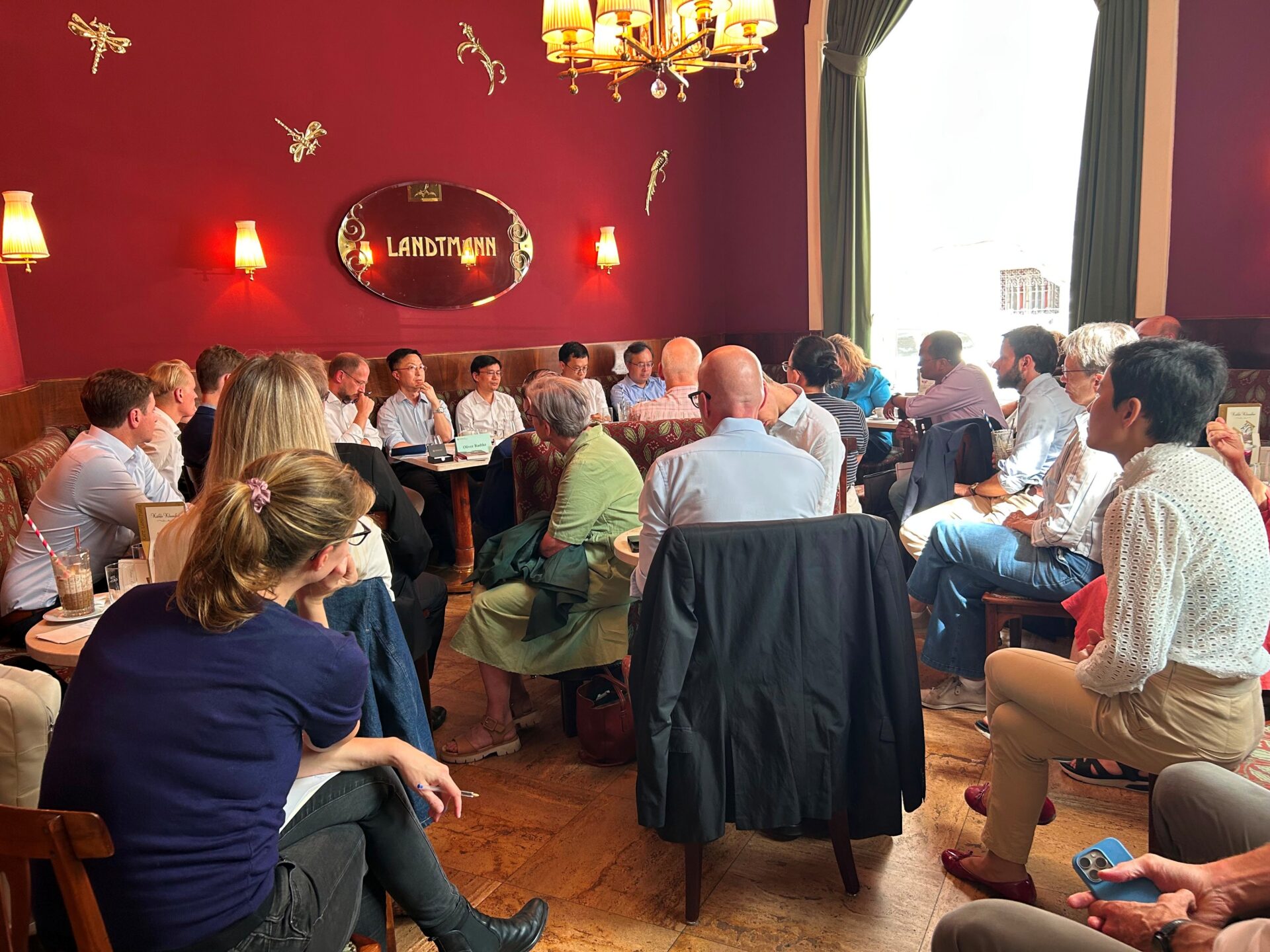
The Bruno Kreisky Forum for International Dialogue hosted an informal discussion moderated by sinologist Oliver Radtke on Europe–China–US relations. The senior delegation from Fudan University, Shanghai, China, attracted more than 30 participants from the worlds of business, politics, academia and civil society, and discussed the widening gap in strategic perceptions between Europe and China, the all-encompassing US–China relationship and the triangular relationship between them. Human rights, trade, soft power, Taiwan and China’s potential role in the conflict with Iran were also discussed.
With regard to Europe and China, the gap in how the two sides perceive the strategic environment and their respective roles within it was a recurring theme. Europe is hardening its stance on trade and geopolitical conflicts, whilst Beijing does not regard these as the defining issues in the relationship and expects stability and continuity rather than a breakthrough. This mismatch in expectations helps to explain the mutual frustration over a perceived lack of give and take. Green technology, investment and a shared interest in preventing the use of nuclear weapons in Ukraine emerged as areas where both sides could still find common ground.
The US–China relationship was a recurring theme throughout the discussion, even when the conversation centred primarily on other issues. One line of argument was that Washington’s transactional approach — despite its inconsistencies and forward deployment — offers Beijing a more transparent model of deal-making than Europe’s current approach. Whether the two capitals ultimately regard each other as partners or rivals remained an open question.
Beyond the respective bilateral relationships, the panellists addressed the wider triangular relationship and the question of whether Europe has any bearing on US strategic calculations. No clear consensus emerged on the extent of Europe’s potential influence. Human rights, trade and soft power emerged as recurring issues on which the relationship is put to the test rather than negotiated, whilst Taiwan and the danger of a two-sided conflict prompted some of the most pointed contributions. On China’s role in the US–Israeli conflict with Iran, participants expressed doubts about its ability to impose an agreement, whilst recognising that China is potentially well placed to facilitate one.
Despite some disagreements that arose during the discussion, there was broad recognition of the importance of ongoing dialogue with one of the world’s leading powers. Understanding how the same set of challenges is perceived from different perspectives remains a key prerequisite for tackling them.