CLIMATE CHANGE: A PREFERRED ARENA FOR GLOBAL COMPETITION?
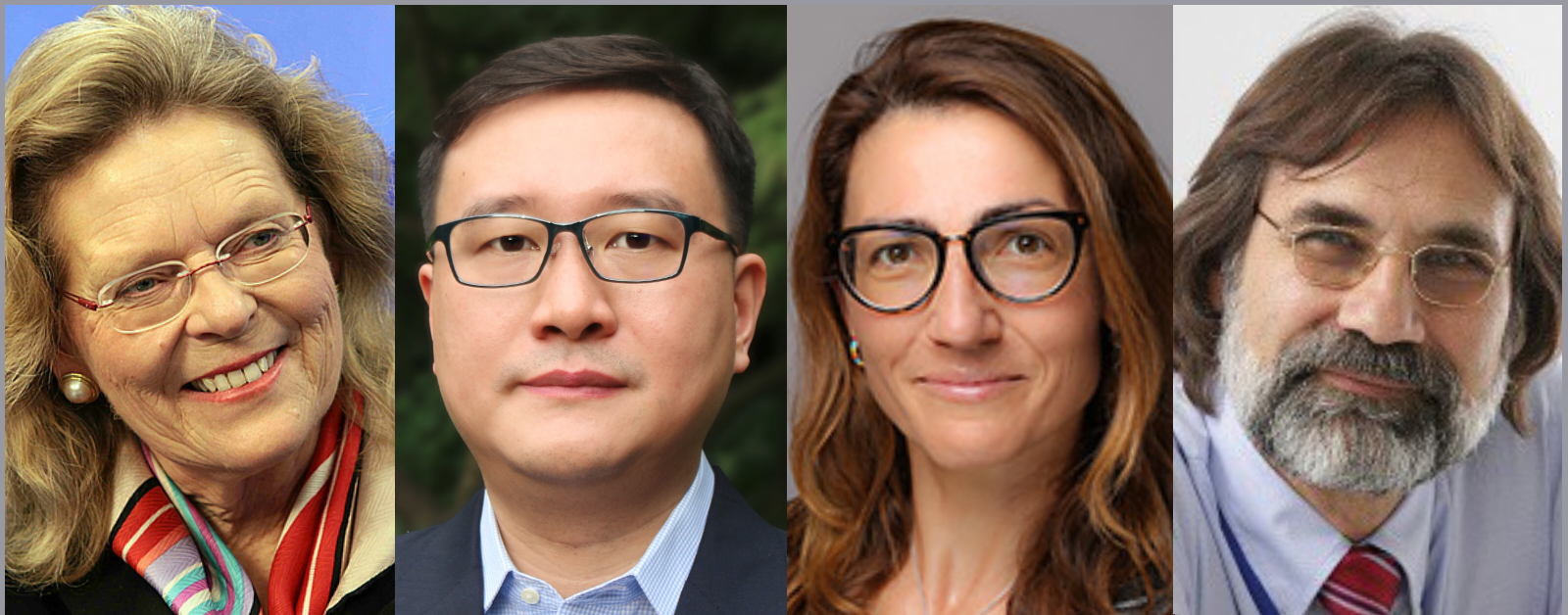
Irene Giner-Reichl in conversation with Alex Hai Zhang, Velina Tchakarova, Nebojša Nakićenović
CLIMATE CHANGE: A PREFERRED ARENA FOR GLOBAL COMPETITION?
While the latest round of negotiations at the UN Framework Convention on Climate Change Conference of the Parties in Glasgow did not achieve the long-awaited breakthrough in commitments, climate change – and the transition to carbon-neutral energy systems which it necessitates – become increasingly visitable as arenas for global competition which – as has been argued by reputed Chinese political scientist Yan Xuetong at a previous edition of “Looking at China” – is driven to a large extent by technological advances. The US and China announced a dedicated pact on climate change at the Glasgow summit. Climate Change is a long-standing item on the list of cooperation areas the EU pursues with China. The US, the EU (so far the only political entity successful in decoupling GDP growth from resource/energy use), and China have each committed to target dates for carbon neutrality. Russia is a major player when it comes to securing conventional energy (oil and gas) both to Europe and to China.
In our conversation we will explore how some of the long-term patterns of technological change, economic development and response to climate change play themselves out as factors of global power struggles. We will hear how China has integrated climate change mitigation and adaptation in its current Five Year-Plan, whether support for “ecological civilization” will be sufficient to engineer the massive effort of de-carbonizing the Chinese economy, and how Belt and Road might contribute to new carbon-neutral infrastructure in numerous areas of the world. We will explore how Russia fits in the global equation and how a major decarbonization of the global economy might impact it.
Alex Zhang, Executive Director of Eco Foundation Global, live from China (via zoom)
Velina Tchakarova, Director, Austria Institute for European and Security Policy (AIES)
Nebojša Nakićenović, Prof. em. Vienna University of Technology, Vice-Chair of Group of Scientific Advisors to EC Commission, former Deputy Director General of IIASA
Moderation: Irene Giner-Reichl, Ambassador ret.